A custom oven mitt is really two products wearing one shape. It is a piece of protective equipment that has to stand between a bare hand and a 450-degree sheet pan, and it is a branded surface that has to carry a logo through months of heat and dozens of wash cycles. Those two jobs pull in different directions, and most ordering mistakes come from treating the mitt as only one of them. Pick a fabric for its print quality and you can end up with a mitt that scorches; pick a decoration method that the fabric will not hold and the logo cracks off in a season. The way to get both right is to decide in order: match the material to the heat, then match the decoration to the material, then settle size, quantity, and lead time.
Match the material to the heat it will actually see
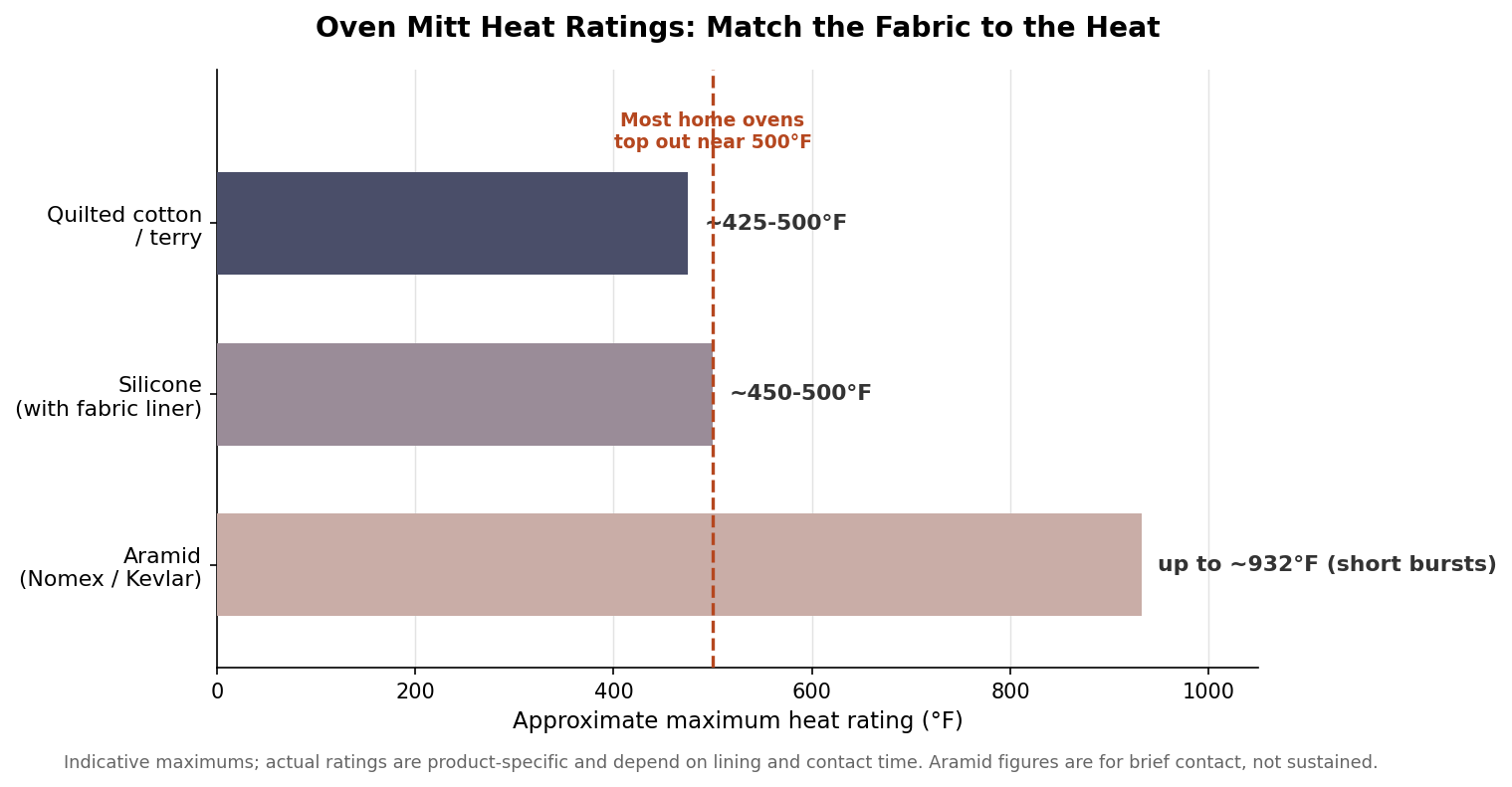
Three materials cover almost every custom oven mitt, and they separate cleanly by how much heat they take. Quilted cotton or terry cloth is the classic: breathable, comfortable, inexpensive, and typically rated somewhere in the range of 425 to 500 degrees Fahrenheit depending on how thick the lining is. A heavier quilted liner, on the order of 400 grams per square meter, buys both insulation and a few more degrees of headroom. Silicone, usually built as a silicone shell over a cotton or polyester liner, lands in a similar band of roughly 450 to 500 degrees, and its real advantages are grip and cleanup: it is waterproof, wipes down in seconds, and holds a wet pan without slipping. Its drawbacks are bulk and reduced finger dexterity. Aramid fibers such as Nomex and Kevlar are the commercial tier, tolerating brief contact up to around 900 degrees, which is why they turn up in pizzerias, foundries, and serious barbecue rigs rather than home kitchens.
The practical read is that most home ovens top out near 500 degrees, so a well-made cotton or silicone mitt covers the great majority of household and light-commercial gifting. Reserve aramid for buyers who genuinely handle open flame or sustained high heat, and be honest that its higher ratings assume brief contact, not resting a hand on a hot rack.
Then choose how it is decorated, because the fabric decides
The single biggest constraint on how your logo looks is the fabric you just chose. Screen printing is the workhorse for cotton mitts: it lays down one to a few solid spot colors in a defined imprint area, often around three by three inches on the back of the hand, and it is the cheapest route at promotional quantities. It does not do photographs or gradients well, and each color adds a screen charge. Dye sublimation is the opposite trade: it bonds ink into polyester or specially coated fabric under heat, so it prints full color, edge to edge, including photographs and all-over patterns, but it needs a light or white base and does not work on natural cotton or over a silicone shell. Embroidery stitches the design into the cuff or back for a durable, premium look that survives washing better than any print, at the cost of fine detail and small text, which thread cannot resolve. For very small runs, direct-to-garment or heat-transfer printing can put full color on a handful of mitts without the screen setup. Decide the look first, then confirm the fabric can carry it.
Size, construction, and the details that get skipped
Length is the spec buyers most often overlook. A standard mitt runs roughly 11 to 13 inches, which protects the hand and a little of the wrist; commercial and barbecue mitts stretch to 15 or 17 inches to guard the forearm reaching deep into an oven or over a grill. Look at the construction, not just the outside: a mitt is only as safe as its lining, so a thin single layer with a printed face may photograph well and still let heat through, while a quilted, multi-layer build with a defined liner weight is what actually stops a burn. Small touches matter for daily use, too. A sewn hanging loop keeps the mitt off the counter and dry, a longer gauntlet cuff adds forearm coverage, and a double or connected mitt suits two-handed lifts of heavy roasting pans. If the mitt is a gift or a retail product rather than a giveaway, these details are the difference between something used and something drawered.
Buying custom: minimums, price, and lead time
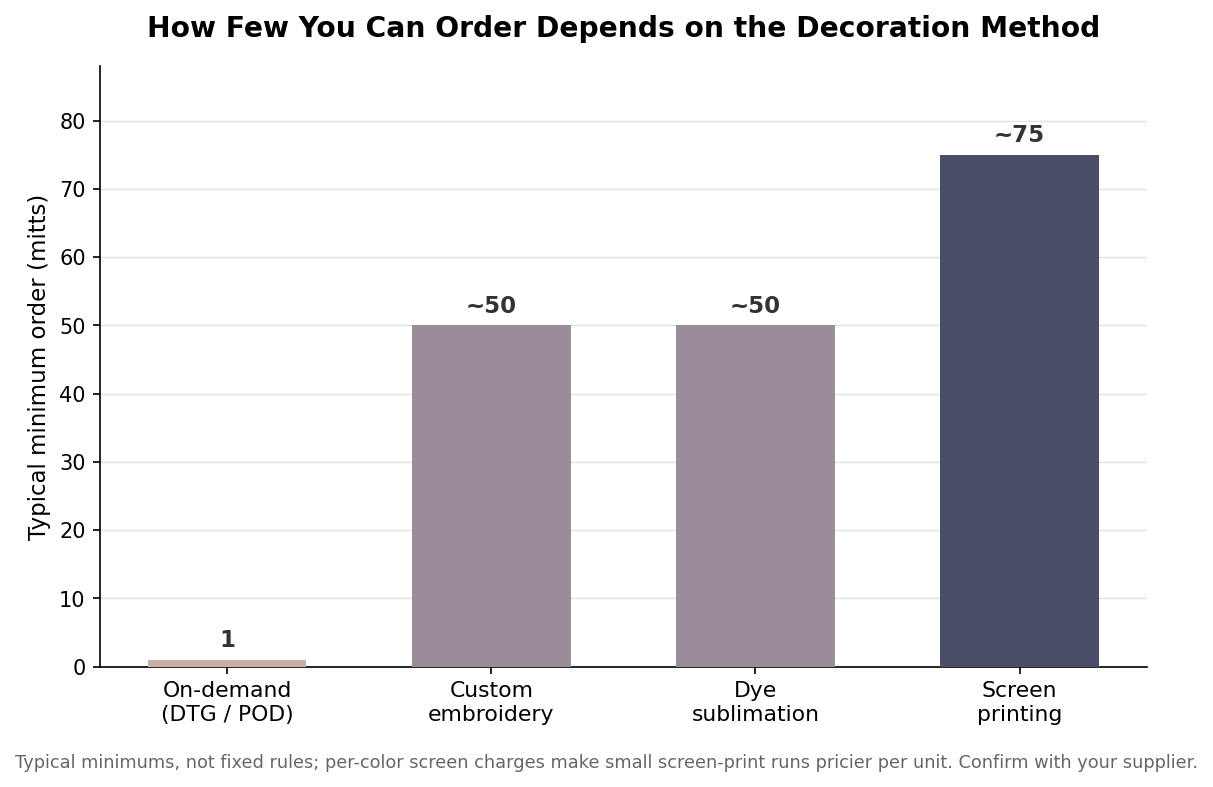
Custom oven mitts are refreshingly accessible at low volumes. Promotional screen-printed mitts commonly start at a minimum of around 75 pieces, with per-unit pricing that often sits near 2.85 dollars at the smallest tier and settles closer to 2.50 dollars once you pass roughly 150 units, before setup and per-color screen charges. Dye-sublimated and on-demand routes push the minimum even lower, sometimes to 50 pieces or a single unit for print-on-demand, though full-color work carries a higher per-piece cost. Those figures are indicative rather than a quote for your specific art and fabric, but the pattern is dependable: the price per mitt falls fast up to a couple hundred units and then flattens, so ordering well past a price break rarely lowers the unit cost much.
Production time for custom promotional mitts typically runs about 10 to 12 business days after art approval, plus shipping, and rush service is often available for a fee. Two habits save most headaches. Ask for a physical pre-production sample when color accuracy or brand matching matters, because a mitt’s textured, seamed surface renders a logo differently than a flat sheet does. And confirm care instructions before you commit, since a cotton mitt that is machine washable and a silicone one that only needs a rinse should be labeled and sold differently. Specify in that order, from heat rating down to wash label, and a custom oven mitt does both of its jobs at once: it protects the hand and it carries the brand, load after load.